
The freeze-thaw cycles of Kentucky winters, combined with heavy traffic and the region’s clay-heavy soils, create the perfect conditions for asphalt deterioration. But not all pavement damage is the same, and misidentifying the problem can lead to costly repairs that miss the root cause entirely.
Understanding the types of asphalt damage affecting your property is the first step toward making a smart, cost-effective repair decision. Whether you are dealing with a single sinkhole-like crater or a web of fine cracks spreading across your surface, each problem tells a different story about what is happening beneath the pavement.
What Is Alligator Cracking and Why Does It Happen?
Alligator cracking asphalt in Louisville is one of the most commonly misunderstood forms of pavement failure. Named for its resemblance to the scaly skin of an alligator, this pattern of interconnected cracks spreads across a section of pavement in a web-like network. It typically appears in areas that receive the most concentrated traffic load, such as tire tracks on a driveway or the entry lanes of a parking lot.
So what causes alligator cracking in asphalt? The short answer is structural failure from below. When the base layer or subgrade soil beneath the pavement becomes weakened by moisture infiltration, poor compaction during installation, or prolonged stress from heavy loads, the asphalt surface loses its support. Over time, the top layer begins to flex with each vehicle pass, and that repeated bending causes the interconnected crack pattern that gives this damage type its distinctive name.
In Louisville and across Kentucky, clay soils are a major contributing factor. Clay expands when wet and contracts when dry, which constantly shifts the foundation beneath your pavement. Add in the weight of delivery trucks or repeated parking in the same spot, and you have the ideal recipe for alligator cracking to develop. Once it starts, it spreads quickly if left unaddressed.
Alligator cracking is not a surface-level problem. Sealing over it without addressing the base will only delay further deterioration. A proper repair typically involves removing the damaged section and rebuilding the base before resurfacing.
Understanding Potholes: More Than Just a Nuisance
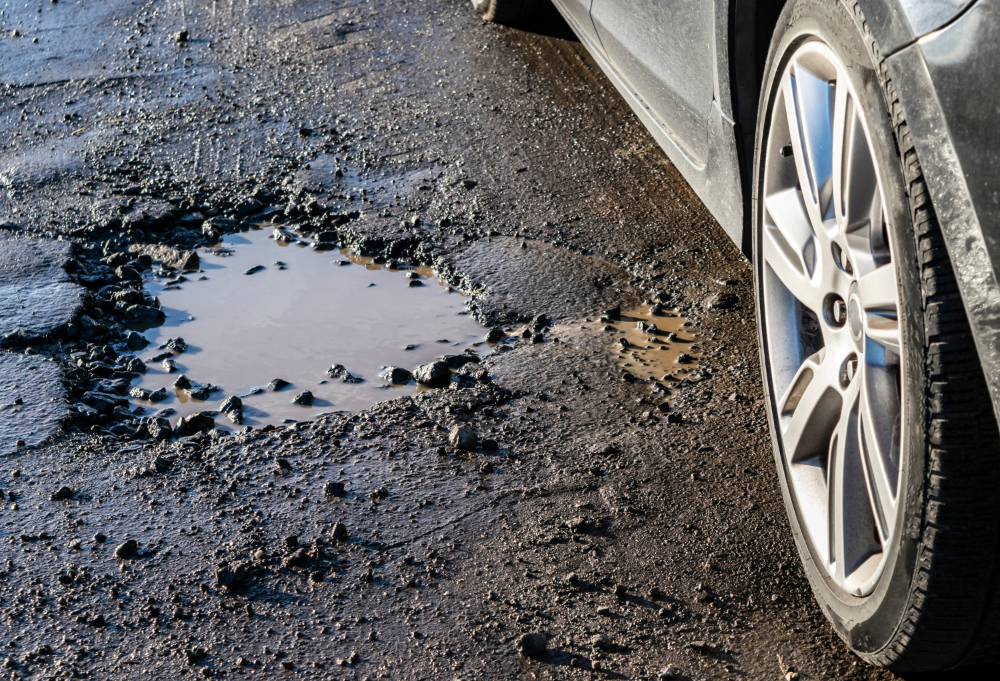
Potholes are the most visible and frustrating of all asphalt crack types. They form when water seeps into existing cracks in the pavement, freezes during cold Kentucky nights, and expands. That expansion pushes the asphalt upward. When temperatures rise and the ice melts, a void is left beneath the surface. Vehicle traffic then causes the weakened pavement to collapse inward, creating the familiar crater shape we all dread hitting.
Pothole repair in Louisville is a year-round concern, but it becomes especially urgent after winter. The combination of freezing temperatures, thaw cycles, and wet conditions makes Kentucky roads and driveways particularly vulnerable. Left unrepaired, a small pothole grows rapidly. Each passing vehicle removes more material from the edges, widening and deepening the damage with every impact.
What many property owners do not realize is that potholes are often a secondary problem. They usually begin as cracking or alligator damage that was not treated in time. Water enters through those initial cracks, the freeze-thaw process does its work, and eventually a pothole forms. This is why addressing early-stage cracking promptly is so important; waiting until you have a pothole means the repair scope (and cost) has already grown significantly.
For small to medium potholes, a cold-patch or hot-mix asphalt repair can restore the surface temporarily or permanently, depending on the severity of the base damage. Larger potholes or those that keep returning may indicate a deeper structural issue that requires full-depth reclamation or base replacement.
Edge Cracking: The Problem Along Your Pavement’s Border
Edge cracking is a specific type of damage that occurs along the outer edges of a driveway or parking lot, typically within a foot or two of the pavement’s border. Unlike alligator cracking, which spreads across high-traffic zones, edge cracking follows the perimeter of the surface in a longitudinal line that may appear relatively straight or slightly irregular.
This is one of the types of asphalt damage that often goes unnoticed until it becomes severe, because it starts at the margins of the pavement rather than in high-visibility areas. The primary cause is a lack of lateral support along the edges. When the soil alongside the pavement is not properly compacted, when vegetation and tree roots push against the border, or when water drains off the surface and pools at the edge, that outer strip of asphalt has nowhere to go but down.
In Louisville, KY, edge cracking is especially common on residential driveways that were installed without a proper border or curbing. Grass and landscaping that sit flush with the asphalt edge can also trap moisture, accelerating the deterioration process. Over time, the cracked edge begins to crumble away, narrowing the usable surface and creating an uneven, hazardous border.
Repairing edge cracking typically involves cutting away the damaged material, improving drainage and compaction along the edge, and filling or patching the area with new asphalt. In some cases, adding a concrete curb or border edging can prevent the problem from recurring.
How to Tell Which Problem You Actually Have
Identifying your specific asphalt crack types matters because each one requires a different repair approach. Here is a simple way to assess what you are dealing with.
If the damage looks like a cracked, dried-up lakebed with a network of interlocking fissures covering a section of your pavement, you are most likely dealing with alligator cracking. The affected area often feels slightly soft or spongy underfoot, which is a sign that the base beneath is compromised.
If you have a hole or depression in the pavement, especially one with defined edges and loose material inside, that is a pothole. Pay attention to whether it is growing over time; a pothole that keeps expanding after basic filling may point to an underlying base failure.
If the cracking is concentrated along one or both sides of your pavement and runs in a line parallel to the edge, edge cracking is your issue. Check whether the adjacent soil appears sunken, eroded, or saturated, since those conditions are almost always part of the cause.
Keep in mind that these problems can co-exist. A driveway in Louisville, Kentucky might have edge cracking along one side, a developing pothole near the entrance, and early-stage alligator cracking in the middle. A thorough inspection by a qualified asphalt contractor will give you the clearest picture of what repairs are needed and in what order.
Why Prompt Action Matters in Louisville’s Climate
Kentucky’s climate does not do pavement any favors. The combination of hot, humid summers and cold winters with multiple freeze-thaw cycles puts asphalt through enormous stress year after year. All three types of asphalt damage mentioned here tend to worsen rapidly when exposed to moisture, temperature swings, and continued vehicle traffic.
Addressing cracks, potholes, and edge damage early almost always costs less than waiting. A small alligator-cracked section that gets sealed or patched in its early stage is far less expensive to fix than one that has been allowed to expand over two or three seasons. The same is true for potholes and edge cracking; early intervention preserves the surrounding pavement and prevents water from reaching the base.
The Right Repair Starts With the Right Diagnosis
No matter what types of asphalt damage you are facing on your Louisville, KY property, the path forward is the same: get an accurate diagnosis before committing to a repair strategy. Whether you need targeted pothole repair in Louisville, full-depth alligator cracking remediation, or edge stabilization, working with an experienced local contractor who understands Kentucky soil conditions and climate will make the difference between a lasting fix and a temporary patch that fails by next spring.
Need a Paving Contractor Near You?
Here at Ezzie Harrison Asphalt Paving, Sealcoating, and Repair, we’ve been proudly serving Louisville, Shelbyville, and Simpsonville since 1995. Whether you need crack repair, asphalt paving, seal coating, gravel hauling, or light grading, our team is here to provide high-quality, reliable service every time. We’re known for getting the job done right the first time, and with all five-star reviews, we take pride in our commitment to excellence. If you want a job well done, reach out to us today, and let’s get your driveway or parking lot looking its best!