
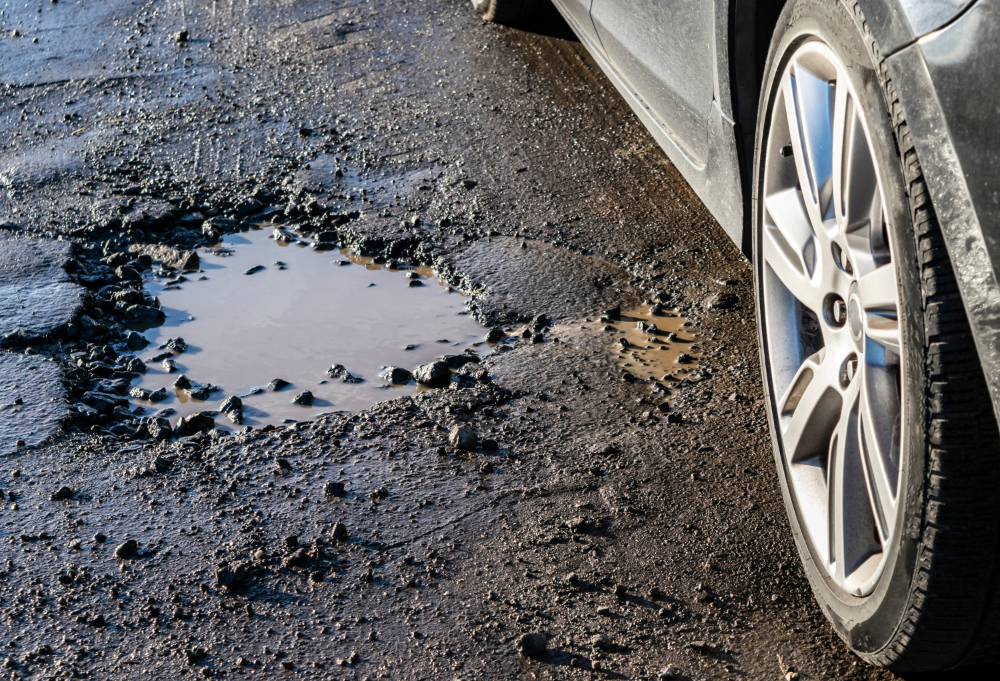
A strong storm can make drainage problems around a paved surface impossible to ignore. If puddles remain on your driveway or parking lot long after nearby pavement has dried, the water may be showing you where the surface, base, or drainage design is beginning to fail.
In Louisville, that matters because heavy rain can put a large amount of runoff onto paved surfaces in a short period of time. Repeated ponding can accelerate deterioration and turn a small low spot into a larger pavement problem.
Quick answer: Standing water usually keeps returning because the pavement does not have enough slope, has settled over time, contains depressions or damaged areas, or is receiving more runoff than its drainage system can handle. Simply filling cracks may slow water intrusion, but it will not correct a grading problem. The right asphalt repair solution depends on whether the problem is limited to the asphalt surface or extends into the base underneath it.
What local property owners should know
-
Water that remains after surrounding pavement dries usually indicates a low spot or drainage problem rather than normal storm runoff.
-
Louisville MSD identifies heavy rainfall and overwhelmed drainage systems as causes of inland flooding throughout the community.
-
Private drainage problems affecting only one or two properties generally remain the property owner’s responsibility rather than MSD’s responsibility.
-
Cracks, potholes, rutting, and depressions can allow water to reach the pavement base and make deterioration worse.
-
Correcting the cause of standing water generally provides a better long-term result than repeatedly patching the same low area.
Why Standing Water Matters for Louisville Pavement
Standing water matters for Louisville pavement because asphalt performs best when runoff can move off the surface instead of repeatedly collecting in the same depression. Water can enter open cracks and damaged areas, affect the supporting material underneath the pavement, and contribute to additional movement and deterioration.
Louisville has a long history of intense rain and flash-flooding events. Louisville MSD reports that more than seven inches of rain fell over five days during an April 2025 flood event, illustrating how much water local drainage systems and paved properties may need to manage during severe weather.
Properties in areas such as Fern Creek, Okolona, Shively, Jeffersontown, St. Matthews, and neighborhoods inside the Watterson Expressway can have very different drainage conditions. Older pavement, changing grades, nearby development, roof runoff, storm drains, and surrounding elevations all affect where water travels.
At Ezzie Harrison Asphalt Paving, Sealcoating, and Repair, we look beyond the puddle itself when evaluating pavement problems. We want to determine why the water is collecting before recommending the appropriate asphalt repair or paving solution.
What Causes Water to Pool on a Driveway or Parking Lot?
Water pools on a driveway or parking lot when runoff reaches an area faster than it can drain away, usually because of poor slope, pavement settlement, surface depressions, drainage obstructions, or deterioration below the asphalt. Identifying which condition is present is essential because the correct repair can vary substantially.
Common local causes include:
1. Low spots in the pavement.
A driveway or parking lot should direct runoff toward an appropriate drainage area. If part of the pavement was installed too low or has settled, water naturally collects there.
2. Base failure or settlement.
The asphalt surface depends on a stable foundation. When supporting material shifts, settles, washes out, or becomes compromised, the asphalt above it may sink and create a bowl-shaped depression.
3. Rutting from traffic.
Repeated vehicle loads can create wheel-path depressions, particularly where vehicles frequently stop, turn, park, or travel along the same path.
4. Clogged or overwhelmed drainage.
Louisville MSD notes that leaves, grass clippings, twigs, and other debris can block catch basins and gutter drains and contribute to localized flooding. Private lots may have similar problems around drains, channels, or drainage paths.
5. Runoff from surrounding surfaces.
Roof downspouts, neighboring pavement, sidewalks, landscaped slopes, and adjoining lots can direct additional stormwater onto asphalt that was not graded to handle it.
Warning Signs Your Pavement Has More Than a Drainage Problem
Standing water becomes a stronger sign of pavement failure when it appears alongside cracks, settlement, potholes, or surface movement. These symptoms can indicate that moisture and traffic are affecting more than the top layer of asphalt.
Watch for:
-
Puddles that remain well after the storm has passed
-
Cracks running through or around the ponding area
-
Asphalt that looks sunken compared with nearby pavement
-
Potholes forming in the same place where water collects
-
Loose or broken pavement along the edges of a puddle
-
Wheel ruts that fill with water after rainfall
-
Repeated patch failure in the same location
-
Water flowing toward a garage, building entrance, sidewalk, or neighboring property
If the puddle returns after nearly every significant storm, documenting its depth and boundaries after rainfall can also help show how large the low area has become.
When Should You Call an Asphalt Professional?
You should call an asphalt professional when standing water repeatedly returns, pavement is sinking or cracking, previous patches have failed, or runoff is moving toward a building or heavily traveled area. These conditions often require evaluating pavement grade and structural condition rather than simply sealing a visible crack.
Property owners can safely keep leaves and debris away from accessible surface drainage areas when conditions are dry. Louisville MSD specifically advises residents not to remove catch-basin grates because the areas underneath can be dangerous.
A paving professional should evaluate situations where asphalt needs to be removed, elevations need to be corrected, or the base may require rebuilding.
Can Sealcoating Fix Standing Water?
Sealcoating cannot correct standing water caused by improper slope, settlement, rutting, or base failure because it follows the existing shape of the pavement. It can be part of an asphalt maintenance program, but a drainage-related depression generally needs to be addressed before routine surface maintenance will provide its intended benefit.
The same principle applies to crack filling. Sealing an appropriate crack can help limit water entry through that opening, but it does not lift a low section of pavement or create the slope needed to move stormwater away.
If water is already collecting in a depression, correcting the drainage or pavement profile should come first.
How Can Standing Water Be Prevented?
Standing water can often be reduced by maintaining drainage paths, repairing pavement damage early, keeping drains clear, and making sure repaired or newly paved surfaces have appropriate grades for runoff. Prevention is especially valuable before seasons when Louisville receives repeated heavy rain or winter weather.
Property owners can:
-
Remove leaves and debris from private drainage paths.
-
Watch where runoff travels during moderate rainfall.
-
Check whether downspouts discharge directly onto pavement.
-
Repair developing potholes and significant pavement failures before they expand.
-
Address noticeable settlement rather than repeatedly filling the resulting depression.
-
Have older commercial pavement evaluated when drainage patterns begin changing.
MSD advises residents to keep storm-drain grates clear of debris because clogged drainage infrastructure contributes to street and yard flooding.
Repair or Replacement: Which Option Makes Sense?
Repair makes sense when the drainage problem is isolated and the surrounding asphalt and base remain serviceable, while larger-scale replacement may be more appropriate when settlement, widespread cracking, repeated patch failures, or poor grading affect a broader section of pavement. The key is correcting the underlying reason water collects.
A localized repair may involve removing failed asphalt, addressing the supporting material, and rebuilding the area at an elevation that promotes drainage.
For an older Louisville parking lot with several interconnected low spots, widespread deterioration may justify a larger paving solution instead of treating each puddle separately.
We can evaluate the affected pavement and explain whether asphalt repair, resurfacing, paving, or another maintenance approach fits the observed condition.
Common Mistakes Property Owners Make After a Storm
The most common mistake is treating the visible puddle without correcting the grade, drainage pattern, or pavement failure that caused it. A temporary fix may improve appearance for a short time while leaving the underlying condition unchanged.
Mistake: Filling a depression without checking surrounding elevations.
Consequence: Water may remain or simply move to another low area.
Better approach: Evaluate how runoff enters and leaves the entire paved section.
Mistake: Sealcoating damaged pavement to stop ponding.
Consequence: The low spot remains because sealcoating does not change pavement grade.
Better approach: Complete needed repairs first, then consider preventive maintenance.
Mistake: Ignoring small puddles year after year.
Consequence: Cracks and pavement deterioration around the area may continue expanding.
Better approach: Investigate recurring ponding before the affected area becomes significantly larger.
A Common Louisville Parking Lot Scenario
A common Louisville scenario is a commercial parking lot that appears acceptable when dry but develops several persistent puddles after a strong thunderstorm. One depression may form near a frequently traveled drive aisle, while another develops around aging cracks or a previously repaired section.
Once the rain stops, most of the lot drains normally, but the same areas stay wet. Repatching only the visible damage may not solve the problem if settlement or poor grade remains underneath.
Evaluating the pavement after rainfall can reveal the drainage pattern clearly and help determine how much of the affected section needs correction.
What Happens If You Keep Ignoring Standing Water?
Ignoring recurring standing water can allow a manageable pavement defect to become a larger repair as moisture enters cracks, damaged edges continue breaking apart, or underlying settlement progresses. For commercial properties, persistent puddles can also interfere with parking areas, pedestrian routes, entrances, and normal property use.
Louisville’s combination of strong storms and seasonal temperature changes gives property owners good reason to address drainage-related pavement deterioration early rather than waiting for a pothole or broad failed area to appear.
Service Areas
We provide asphalt paving, sealcoating, and repair solutions for properties in Louisville and surrounding communities within our service area. Property owners in Jefferson County and nearby areas can contact us to discuss recurring pavement drainage, cracking, potholes, settlement, and related asphalt concerns.
Frequently Asked Questions
Why does my Louisville driveway hold water after every storm?
Your Louisville driveway may hold water because part of the pavement is too low, has settled, or does not have enough slope to move runoff away. Look at whether the puddle consistently forms in exactly the same location. Persistent ponding usually calls for an evaluation of the pavement profile and underlying condition.
Is standing water normal after heavy rain in Louisville?
Some temporary water during an intense Louisville storm can be normal, but a puddle that remains in the same depression after surrounding pavement has drained deserves attention. Heavy rainfall can temporarily overwhelm drainage, while water that repeatedly stays behind often points to a pavement grade, settlement, or drainage issue.
Can I just add asphalt on top of a low spot?
Adding asphalt may not solve a low spot unless the surrounding grades and condition of the existing pavement support that repair. Building up one section incorrectly can redirect runoff somewhere else or leave weak material underneath. The repair should account for where water comes from and where it needs to go.
Does Louisville MSD repair drainage problems on private parking lots?
Louisville MSD distinguishes between public and private drainage and states that it is generally not responsible for private drainage involving only one or two properties. Drainage infrastructure and ownership can vary, so property owners should determine whether the issue involves a public system or conditions within the private property.
Why does my parking lot keep failing in the same area?
A parking lot that repeatedly fails in the same area may have a problem beneath the surface, such as inadequate support, settlement, recurring moisture intrusion, or drainage that continually directs water toward that location. Repeated surface patches may fail again when the deeper condition remains unresolved.
Should I repair standing-water problems before winter?
Yes, evaluating standing-water problems before winter can be useful because open cracks and existing pavement damage allow additional moisture into vulnerable areas. Addressing drainage and structural problems earlier can reduce the amount of deteriorated pavement that may require attention after another season of rain and temperature changes.
Can clogged drains cause parking lot puddles in Jefferson County?
Yes. Clogged inlets, drains, or drainage paths can prevent water from leaving a Jefferson County parking lot efficiently. Louisville MSD similarly identifies debris-covered catch basins and gutter drains as contributors to localized flooding. Keep accessible private drainage areas clear and have persistent drainage problems properly evaluated.
Will a new asphalt surface automatically solve my drainage problem?
Not automatically. New asphalt needs to be installed with appropriate elevations and drainage in mind. If an existing base has failed or surrounding grades direct excessive runoff toward the pavement, those conditions may also need attention. Good paving starts with understanding how water is supposed to move across and away from the site.
Stop Letting the Same Puddle Turn Into a Bigger Pavement Problem
Recurring standing water is a useful warning sign. By identifying whether the cause is poor grade, settlement, drainage, or pavement deterioration, we can focus the repair on the actual problem instead of repeatedly treating its symptoms.
Protect Your Louisville Pavement Before the Next Storm
We can evaluate the affected area and discuss practical asphalt paving, sealcoating, or repair options based on what we find.