
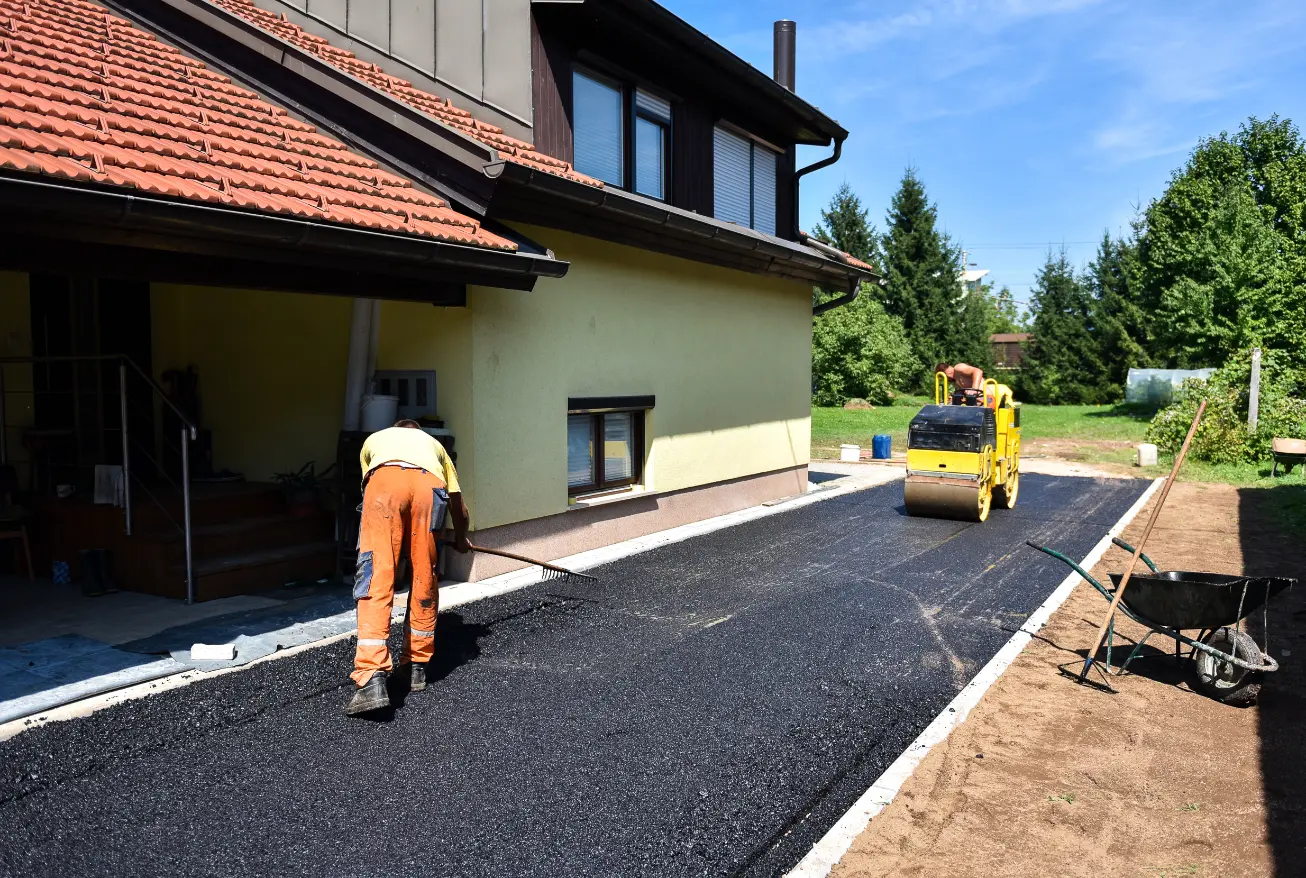
When property owners in Louisville, KY start thinking about asphalt work, one of the most common misconceptions is that paving a driveway and repairing a commercial parking lot are basically the same job. The truth is, these two types of projects differ significantly in scope, materials, design requirements, and long-term maintenance demands.
Understanding those differences can help you make smarter decisions, whether you are a homeowner looking to upgrade your driveway or a business owner investing in commercial asphalt paving for your property.
Scale, Load Requirements, and Asphalt Thickness for Trucks
The most obvious difference between residential and commercial paving comes down to size and what the pavement needs to support. A residential driveway typically handles passenger vehicles and light trucks, which means the structural demands are relatively modest. A standard residential driveway is usually paved at around 2 to 3 inches of compacted asphalt over a properly prepared base.
Commercial parking lots are an entirely different story. These surfaces must accommodate delivery trucks, heavy SUVs, forklifts, and sometimes even semi-trucks depending on the type of business. This is where asphalt thickness for trucks becomes a critical design consideration. Commercial lots often require 4 to 6 inches of asphalt, sometimes more, along with a deeper, more reinforced aggregate base layer. Cutting corners on thickness in a commercial setting leads to rapid deterioration, rutting, and expensive asphalt repair down the road.
In Louisville and across KY, contractors who specialize in commercial work understand that load-bearing calculations must guide every stage of the design process. What works for a family’s two-car driveway simply cannot be applied to a retail plaza or industrial facility.
Materials: Heavy-Duty Asphalt Mix vs. Standard Residential Blends
The type of asphalt mix used in a project is another major point of differentiation. Residential driveways typically use a standard hot mix asphalt that is well suited for light traffic and moderate temperature swings. It is cost-effective, durable for its intended use, and relatively easy to install.
For commercial applications, contractors rely on a heavy-duty asphalt mix engineered to handle higher stress loads, greater traffic volume, and more frequent freeze-thaw cycles. These mixes often include polymer-modified binders or specific aggregate gradations that improve stability and resistance to deformation. In high-traffic areas like drive-throughs, loading zones, or parking lot entrances, the pavement endures repeated stress in concentrated spots, and only the right mix can hold up over time.
Choosing the wrong material for a commercial project is one of the most expensive mistakes a property owner can make. A heavy-duty asphalt mix costs more upfront, but it dramatically extends the lifespan of the pavement and reduces the frequency of asphalt repair calls over the years.
ADA Compliance Paving and Accessibility Requirements
One of the clearest distinctions between residential and commercial paving is the legal and regulatory framework that applies to commercial properties. Homeowners generally have flexibility in how they design their driveways, subject only to basic local codes. Commercial property owners, on the other hand, must meet a range of federal, state, and local requirements, including the Americans with Disabilities Act (ADA).
ADA compliance paving is a non-negotiable component of any commercial parking lot project in Louisville, KY. This includes properly sloped and marked accessible parking spaces, compliant ramps and curb cuts, tactile warning surfaces, and van-accessible spaces with adequate aisle widths. Failing to meet ADA standards does not just create liability risks; it can also result in fines and costly retrofitting work.
Residential driveways do not face these same requirements. A homeowner can design their driveway with nearly any layout they prefer without worrying about federal accessibility mandates. That simplicity is one reason residential paving projects tend to move faster and cost less per square foot than their commercial counterparts.
For businesses undertaking parking lot construction or major asphalt repair in the Louisville area, working with a contractor who understands ADA requirements is essential. Accessibility must be built into the design from day one, not added as an afterthought.
Parking Lot Sealcoating, Maintenance Cycles, and Long-Term Upkeep
Both residential driveways and commercial parking lots benefit from regular maintenance, but the frequency, scope, and cost of that maintenance differ considerably. Sealcoating is one of the most important preventive maintenance steps for any asphalt surface, and it applies to both types of projects. However, parking lot sealcoating for a commercial property involves far more square footage, more complex striping and markings, and tighter scheduling constraints since many businesses cannot afford extended downtime.
For residential driveways, sealcoating is typically recommended every 2 to 3 years. It is a straightforward process that most homeowners can schedule with minimal disruption. Commercial properties, especially busy ones, require careful planning to sealcoat sections in phases while keeping the lot accessible to customers and employees.
Beyond sealcoating, commercial parking lots require more frequent inspections and faster response to damage. A small crack in a residential driveway can be monitored for a season before repairs become urgent. In a commercial setting, that same crack can quickly widen under heavy traffic, leading to pothole formation, drainage problems, and safety hazards for pedestrians and vehicles alike. Timely asphalt repair is not just about aesthetics in a commercial context; it is about liability management and protecting a significant capital investment.
Businesses in Louisville and throughout KY that invest in a proactive maintenance schedule, including routine inspections, crack sealing, and periodic parking lot sealcoating, consistently extend the life of their pavement by years compared to those who only call for repairs after visible damage sets in.
Drainage Design, Striping, and Site Planning Complexity
Commercial asphalt paving projects involve a level of engineering and site planning that goes far beyond what is needed for a residential driveway. Proper drainage is critical in both cases, but the stakes are much higher in a commercial environment. Poor drainage in a parking lot leads to standing water, accelerated pavement deterioration, and potential flooding that affects adjacent properties or structures.
Commercial lots must be graded and sloped with precision, often incorporating catch basins, storm drains, and retention features that comply with local stormwater regulations. In Louisville, KY, contractors working on commercial sites must coordinate with municipal requirements for runoff management, which adds another layer of planning and permitting to the project.
Striping and pavement markings are also a commercial-specific concern. A residential driveway does not need painted stall lines, directional arrows, fire lane markings, or handicap symbols. A commercial parking lot requires all of these, and they must be refreshed regularly as part of ongoing maintenance. Faded or missing markings create confusion, increase accident risk, and can put a business out of compliance with local codes.
The overall complexity of site planning for commercial asphalt paving in Louisville means that these projects require experienced contractors with a background in commercial work, not just residential paving. The equipment used is often larger, the crews are bigger, and the project timeline involves more coordination with other trades and stakeholders.
Conclusion
Residential driveway paving and commercial parking lot repair may both involve asphalt, but they are fundamentally different in almost every meaningful way. From asphalt thickness for trucks and heavy-duty asphalt mix specifications to ADA compliance paving and parking lot sealcoating schedules, commercial projects demand more expertise, more planning, and more rigorous execution. Property owners in Louisville, KY who understand these distinctions are better positioned to hire the right contractor, budget appropriately, and protect the long-term value of their investment. Whether you need a simple driveway refresh or a full-scale commercial asphalt paving project, working with professionals who know the difference is always the right call.
Need a Paving Contractor Near You?
Here at Ezzie Harrison Asphalt Paving, Sealcoating, and Repair, we’ve been proudly serving Louisville, Shelbyville, and Simpsonville since 1995. Whether you need crack repair, asphalt paving, seal coating, gravel hauling, or light grading, our team is here to provide high-quality, reliable service every time. We’re known for getting the job done right the first time, and with all five-star reviews, we take pride in our commitment to excellence. If you want a job well done, reach out to us today, and let’s get your driveway or parking lot looking its best!