
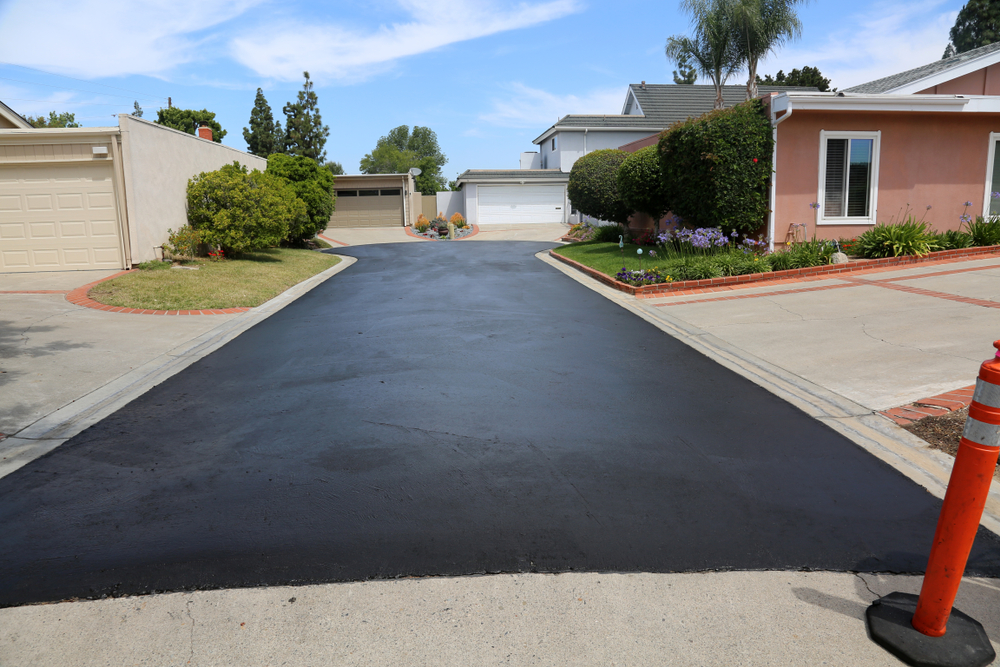
A Louisville driveway can go from looking solid to showing faded color, small cracks, and surface wear surprisingly quickly. Between summer heat, rain, winter cold, vehicle traffic, and repeated temperature changes, local asphalt gets plenty of exposure. But sealcoating is not automatically the right answer every time the pavement starts looking rough.
Sealcoating is worth the money when asphalt is structurally sound but needs protection from weather, oxidation, water, and everyday wear. It becomes a poor investment when the pavement already has major cracking, potholes, drainage problems, crumbling edges, or base failure. In those cases, coating the surface may improve its appearance temporarily without correcting the real problem underneath.
What Louisville property owners should know
-
Sealcoating is preventive maintenance, not a structural asphalt repair.
-
A sound driveway in Louisville may benefit from sealing before surface deterioration progresses into larger cracks.
-
Cracks and damaged areas should generally be repaired before a sealcoat is applied.
-
Jefferson County’s seasonal temperature changes make keeping water out of asphalt cracks especially important.
-
Severely deteriorated pavement may need repair or replacement instead of another surface coating.
Why Sealcoating Matters for Louisville Asphalt
Sealcoating matters for Louisville asphalt because it creates a protective surface over pavement that is still in maintainable condition, helping reduce exposure to sunlight, moisture, automotive fluids, and everyday traffic. Its value comes from preserving usable asphalt, not from hiding structural problems that already require repair.
Louisville pavement experiences several types of weather during a typical year. Hot summer pavement can dry and oxidize, while rain can enter cracks and weak areas. Colder winter periods add another concern because moisture inside pavement defects can contribute to continued deterioration as temperatures change.
Those conditions affect driveways and parking areas across Jefferson County, from older properties around the Highlands and Germantown to suburban pavement in St. Matthews, Jeffersontown, Middletown, and Pleasure Ridge Park.
At Ezzie Harrison Asphalt Paving, Sealcoating, and Repair, we look at the condition of the pavement first because choosing the right treatment matters more than simply putting a new black surface over it.
When Sealcoating Is Actually Worth the Money
Sealcoating is worth the money when your asphalt surface remains stable, reasonably smooth, and free of serious structural damage but is beginning to show normal weathering or fading. In that situation, preventive maintenance can protect the existing pavement instead of waiting until deterioration demands more involved repairs.
Good candidates commonly include asphalt with:
-
A faded gray appearance caused by surface aging
-
Minor surface wear without widespread breakup
-
Small cracks that can be properly repaired first
-
Stable edges without major crumbling
-
No recurring potholes or obvious base movement
-
Proper drainage that does not leave persistent standing water
For Louisville homeowners, timing matters. Sealing pavement that is already failing is very different from maintaining pavement before major failure starts.
When Sealcoating Is a Waste of Money
Sealcoating is usually a waste of money when significant pavement failure is occurring underneath or throughout the asphalt because a surface treatment cannot rebuild a weak base, close large structural failures, or restore badly deteriorated pavement. The underlying problem must be addressed before appearance becomes the priority.
Watch for these warning signs:
-
Large interconnected or alligator-style cracking
-
Potholes or sections that continue to break apart
-
Sunken or uneven pavement
-
Areas where water repeatedly collects
-
Crumbling asphalt around the driveway edges
-
Wide cracks with visible movement
-
Loose aggregate and advanced surface deterioration
If a driveway near Shively, Fern Creek, or another part of the Louisville Metro area has these symptoms, applying sealer alone can amount to spending money on the wrong stage of maintenance.
What Causes Asphalt to Deteriorate Around Louisville?
Asphalt around Louisville commonly deteriorates because water, sunlight, traffic, temperature changes, drainage conditions, and age gradually weaken the pavement and its supporting structure. Sealcoating can help with some surface exposure, but it cannot eliminate problems caused by movement, poor drainage, or a failing base.
Water intrusion: Cracks allow rainwater to move below the surface, where it can contribute to pavement weakness.
Temperature changes: Seasonal heating and cooling place repeated stress on existing cracks and joints.
Sun exposure: Asphalt gradually oxidizes and loses some of its original dark, flexible surface characteristics.
Vehicle loads: Regular vehicle traffic concentrates pressure in frequently used portions of residential drives and commercial parking areas.
Drainage issues: Low spots and poor runoff can keep pavement wet longer and accelerate deterioration around weak areas.
These factors can appear in everything from residential driveways around Hikes Point to commercial lots along heavily developed corridors throughout Jefferson County.
Can You Sealcoat Over Cracks?
Sealcoating should not be treated as a substitute for proper crack repair because sealer is designed to coat the asphalt surface rather than fill significant openings or reconnect separated pavement. Cracks should be evaluated and addressed appropriately before the broader surface receives a protective coating.
Very fine surface imperfections are different from expanding cracks that allow water into the pavement. Once cracking becomes substantial, the right question is no longer simply, “Should I sealcoat this?”
The better question is, “What is causing the pavement to crack?”
That distinction can prevent Louisville property owners from paying for cosmetic work when repair is what the asphalt actually needs.
When Should You Call an Asphalt Professional?
You should call an asphalt professional when you cannot tell whether the pavement needs maintenance, crack repair, patching, or more extensive asphalt work, especially when cracks are spreading, potholes are forming, drainage is poor, or sections of pavement are sinking. Correctly identifying the condition helps avoid unnecessary work.
Property owners can safely keep an eye on fading, minor surface wear, drainage patterns, and new cracks. However, widespread cracking, depressions, recurring potholes, and deteriorating edges deserve closer evaluation.
The goal is not to sell every Louisville driveway a sealcoat. The goal is to determine whether sealcoating fits the actual condition of the pavement.
How to Get More Value From Sealcoating
You get more value from sealcoating by treating it as part of a broader asphalt maintenance plan rather than waiting until the driveway or parking area has already deteriorated badly. Regular visual checks, prompt crack attention, good drainage, and appropriate timing can make preventive maintenance much more worthwhile.
Louisville property owners can periodically:
-
Check the pavement for new cracks.
-
Notice where water sits after heavy rain.
-
Watch for loose or crumbling edges.
-
Address potholes rather than coating over them.
-
Keep debris from blocking normal drainage.
-
Have questionable areas evaluated before scheduling surface treatment.
A little inspection before the work begins can prevent a much larger maintenance mistake.
What Results Should You Expect From Sealcoating?
You should expect properly selected sealcoating to create a more uniform dark surface and provide an added protective layer over asphalt that is already in suitable condition. You should not expect it to eliminate structural cracks, level depressions, repair potholes, or make severely deteriorated pavement function like new asphalt.
This expectation is especially important for older Louisville driveways. A fresh black surface can look dramatically better, but appearance should never be confused with structural restoration.
The best result comes when the treatment matches the pavement’s condition.
Common Sealcoating Mistakes Louisville Property Owners Make
The most common sealcoating mistakes involve applying the product at the wrong time, skipping necessary repairs, or expecting a surface treatment to correct deeper pavement problems. Louisville’s changing seasonal conditions make evaluating cracks, drainage, and overall asphalt stability before treatment particularly worthwhile.
Mistake: Sealing over significant cracks.
Consequence: The cracks remain underneath and can continue deteriorating.
Better approach: Repair appropriate cracks before sealing.
Mistake: Covering potholes with sealer.
Consequence: The damaged asphalt remains damaged.
Better approach: Address the failed area first.
Mistake: Choosing sealcoating based only on appearance.
Consequence: A black surface may temporarily disguise signs of deeper failure.
Better approach: Evaluate pavement condition before choosing a service.
Mistake: Waiting until the pavement is falling apart.
Consequence: Preventive maintenance may no longer be the appropriate solution.
Better approach: Inspect asphalt while it is still structurally serviceable.
A Common Louisville Driveway Scenario
A common Louisville driveway scenario is pavement that has faded from black to gray and developed a few isolated cracks while remaining generally flat and intact. That driveway may be a reasonable candidate for crack attention followed by sealcoating, assuming an inspection does not reveal more serious deterioration.
Now consider another driveway with alligator cracking near the garage, a depression that holds water after storms, and edges breaking into loose pieces.
That pavement needs a different conversation. Simply coating it would not correct the conditions causing those failures.
Knowing which scenario resembles your property is where money can be saved.
Which Asphalt Service Does Your Property Need?
The asphalt service your property needs depends on whether the problem is primarily surface wear or actual pavement failure, with sealcoating serving preventive maintenance and asphalt repair addressing damaged areas. More extensive deterioration may require a larger paving solution rather than repeated attempts to preserve asphalt that has reached the end of its useful condition.
Our services can help address different stages of pavement care, including asphalt paving, sealcoating, and repair.
Sealcoating vs. Repair vs. Paving
Sealcoating, asphalt repair, and paving solve different problems, so the best option is the one that matches the pavement’s current condition rather than the one with the lowest immediate cost. A preventive treatment can be economical on sound pavement, while damaged pavement may require repair before maintenance makes sense.
| Condition | Likely Direction |
|---|---|
| Faded but stable asphalt | Consider sealcoating |
| Minor repairable cracks | Repair first, then evaluate sealing |
| Isolated damaged area | Consider asphalt repair |
| Potholes or substantial cracking | Repair evaluation needed |
| Widespread structural deterioration | Consider paving or larger corrective work |
| Standing water or sinking areas | Diagnose drainage or base issue first |
Where We Serve Around Louisville
We serve Louisville-area property owners who need help determining whether their asphalt needs paving, sealcoating, repair, or a combination of services. Properties throughout Jefferson County, including areas around St. Matthews, Jeffersontown, Middletown, Shively, Fern Creek, and Pleasure Ridge Park, can experience many of the same pavement maintenance challenges.
What Happens If You Ignore Asphalt Deterioration?
Ignoring asphalt deterioration can allow small openings and damaged areas to become larger problems as moisture, traffic, and seasonal temperature changes continue working on the pavement. Waiting does not automatically mean major failure will occur, but preventive options become more limited once cracking, breakup, or base problems advance.
That is why the most economical decision is not always “seal now” or “wait longer.” It is identifying what condition the pavement is actually in.
Frequently Asked Questions About Sealcoating in Louisville
Is sealcoating worth it in Louisville?
Sealcoating can be worth it in Louisville when asphalt remains structurally sound and the goal is preventive surface protection. It is less likely to be worthwhile when a driveway already has potholes, widespread cracking, sinking areas, or other structural problems that require repair before a surface coating is considered.
How do I know whether my Louisville driveway needs sealcoating or repair?
A Louisville driveway that is mostly smooth and stable but faded or lightly weathered may be a sealcoating candidate, while potholes, major cracks, depressions, crumbling areas, or pavement movement point toward repair. An asphalt evaluation can help separate normal surface aging from more significant deterioration.
Does sealcoating fix cracks in asphalt?
No, sealcoating does not function as a structural crack repair. Significant cracks should be addressed with an appropriate repair method before the pavement is sealcoated. Coating directly over damaged asphalt may make the surface look more uniform without stopping the underlying defect from continuing to deteriorate.
Why does Louisville weather matter for asphalt maintenance?
Louisville weather matters because asphalt is exposed to summer heat, rainfall, winter cold, and repeated temperature changes throughout the year. Existing cracks give moisture a path into the pavement, while heat and sunlight contribute to surface aging. Keeping asphalt maintained can help limit exposure before defects become more extensive.
Can an old Louisville driveway still be sealcoated?
An older Louisville driveway can sometimes be sealcoated if it remains structurally stable and does not have extensive deterioration. Age by itself does not determine whether sealing makes sense. The amount of cracking, surface breakup, drainage trouble, edge deterioration, and movement provides better information about which service is appropriate.
Should cracks be repaired before sealcoating in Jefferson County?
Yes, cracks that require repair should generally be addressed before a Jefferson County driveway or parking area receives sealcoating. Sealcoat is intended as a surface treatment rather than a replacement for crack repair. Preparing damaged areas first gives the overall maintenance process a more appropriate foundation.
Is sealcoating worthwhile for a commercial parking lot in Louisville?
Sealcoating may be worthwhile for a Louisville commercial parking lot when the pavement remains stable and preventive maintenance is the goal. Lots with potholes, failed sections, poor drainage, or extensive cracking should be assessed for repairs first so a surface treatment is not being used to disguise more serious problems.
Can sealcoating make badly damaged asphalt look new?
Sealcoating can make asphalt appear darker and more uniform, but it cannot make severely damaged pavement structurally new. Potholes, depressions, alligator cracking, failing edges, and base problems remain even when their appearance is temporarily less noticeable. Correcting those conditions requires the appropriate asphalt repair or paving work.
Protect Your Louisville Asphalt With the Right Service
The best asphalt maintenance decision is the one that addresses what your pavement actually needs. We can help determine whether sealcoating, repair, paving, or another maintenance approach makes sense for your Louisville property.